Online training programme
Foundations of
Therapeutic Music
Develop a more perceptive, relational, and attuned way of working with music. For practitioners, facilitators and musicians.
Join the next cohortWhat you'll develop
Three core competencies
Foundations of Therapeutic Music is a first of its kind nine-month immersive programme designed to help you work with music with greater depth, perception and impact within therapeutic contexts. Across nine learning modules with a highly practical focus, you'll develop three core competencies.
New ways of perceiving and relating to the many dimensions of music, deepening your capacity to listen, respond, and create meaningful musical experiences.
Responding fluidly to the unique dynamics of each moment, learning to make confident musical choices in context, whether working with others or exploring on your own.
Holding diverse perspectives of music simultaneously and inclusively, seeing music as a meeting point of emotion, neuroscience, culture, spirituality, and human development.
Choose your format
Two ways to learn
Learn as part of a structured, live 9-month cohort, or at your own pace.
Who is this for?
Anyone who works with music therapeutically
No formal music training required. This course is for practitioners, facilitators and creatives who want to use music in therapeutic settings with more confidence, intention and impact.
Therapists and guides
Working in clinical, therapeutic or psychedelic-assisted contexts where music plays an active role in the session.
Body and mind practitioners
Using music to hold space, regulate nervous systems or deepen experiential practice.
Musicians and producers
Deepening your relationship with music and how it moves people, whether you perform, produce or curate.
Students and researchers
Exploring the intersection of music, neuroscience, culture and human experience through academic or personal inquiry.
Course testimonials
What our students say
The content and the reflections surrounding it have profoundly influenced my relationship with music. I have gained greater awareness and openness to what is happening to me and to what music offers beyond the structures we know for understanding it. I feel more confident integrating musical resources into my practice as a psychiatrist and trauma therapist.
Most striking to me has been the way the course explores not just therapeutic music, but the capacity of all music to be therapeutic, building a vivid and detailed picture of why that is, and what an understanding of it makes possible. I hoped it might influence my approach to composition, but more than that, these ideas have changed how I think about and listen to music. Something I didn't even imagine was possible.
Foundations of Therapeutic Music offers a rare and thoughtful interdisciplinary synthesis of neuroscience, music, and lived experience. Mendel's sensibility and knowledge are reflected in his teaching, rigorous yet deeply relational, moving fluidly from science to poetry. It has meaningfully enriched how I think about listening, presence, and the role of music in both clinical and creative contexts.
Participating in this course has been a profound experience. The teaching content bridges science, philosophy, and lived musical practice in a way that feels both intellectually expansive and deeply human. Mendel teaches with humility, curiosity, and remarkable depth. Rather than offering rigid methods, he creates a space where participants rediscover music through direct experience, allowing each person to reconnect with their own musical intuition and trust the unfolding of the moment.
I struggled with questions around music personalisation for a while, both in my group sessions and with individuals. This course has given me new approaches, and a very new way of thinking about music. Now I am witnessing the musicality inside both myself and my clients better, and am responding more strategically and creatively.
Average course rating from survey respondents
Of survey respondents said the course met or exceeded their expectations
Of survey respondents are highly likely to recommend to a colleague or peer
Meet your instructor
Dr Mendel Kaelen, PhD
Neuroscientist, musician and course creator.
.jpg)
Dr Mendel Kaelen is internationally recognised for pioneering research on the therapeutic power of music. In this course, he shares the essence of more than 15 years of research and practice.
He completed his PhD in neuroscience at Imperial College London in 2017, specialising in the role of music in psychedelic therapy and has co-authored more than 50 academic papers. His work integrates studies begun in 2007 with mentors across psychotherapy, psychoanalysis, anthropology, phenomenology, and neuroscience.
His platform, Wavepaths, has supported over 50,000 clinical sessions. He has guided hundreds of group and individual sessions, and curated therapeutic playlists that have reached more than 100,000 listeners worldwide.
Mendel teaches with humility, curiosity, and remarkable depth. Rather than offering rigid methods, he creates a space where participants rediscover music through direct experience. That approach allows each person to reconnect with their own musical intuition and trust the unfolding of the moment.
TK — Practitioner of Music-ing and Relational Sound, Co-Founder KTTK Love
Step inside the course
A unified understanding of therapeutic music
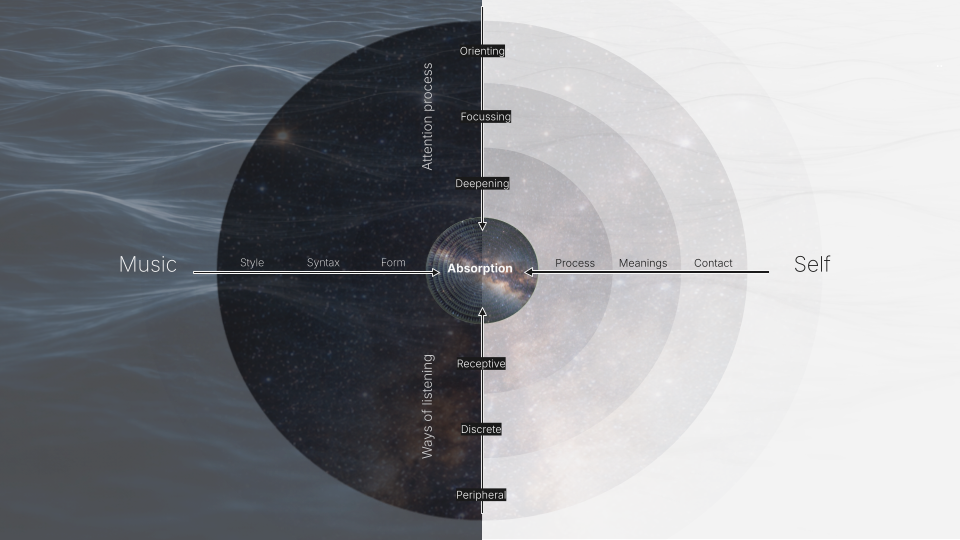
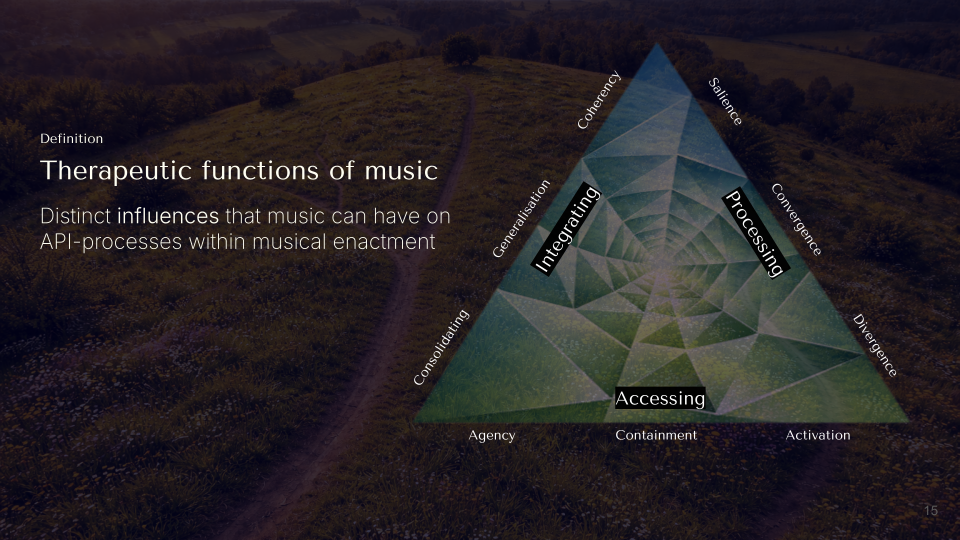
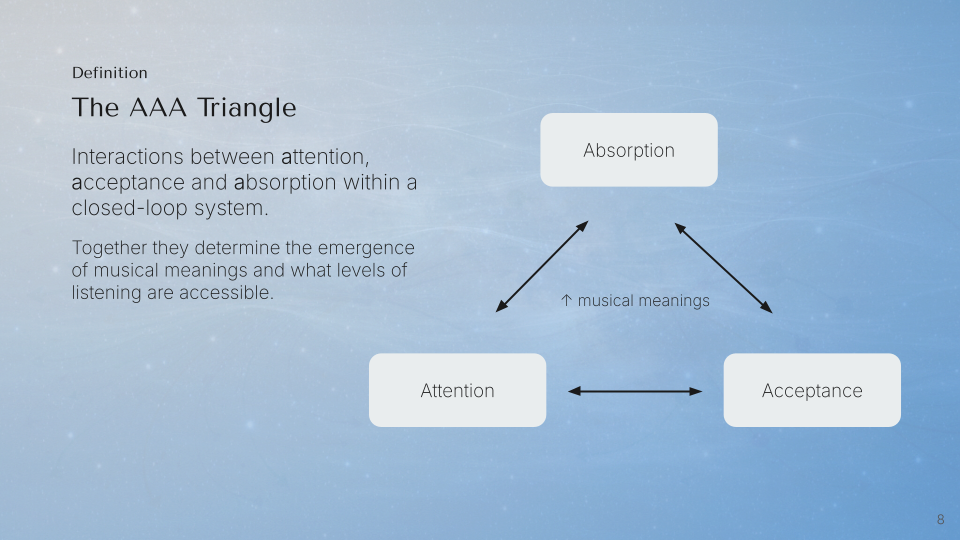
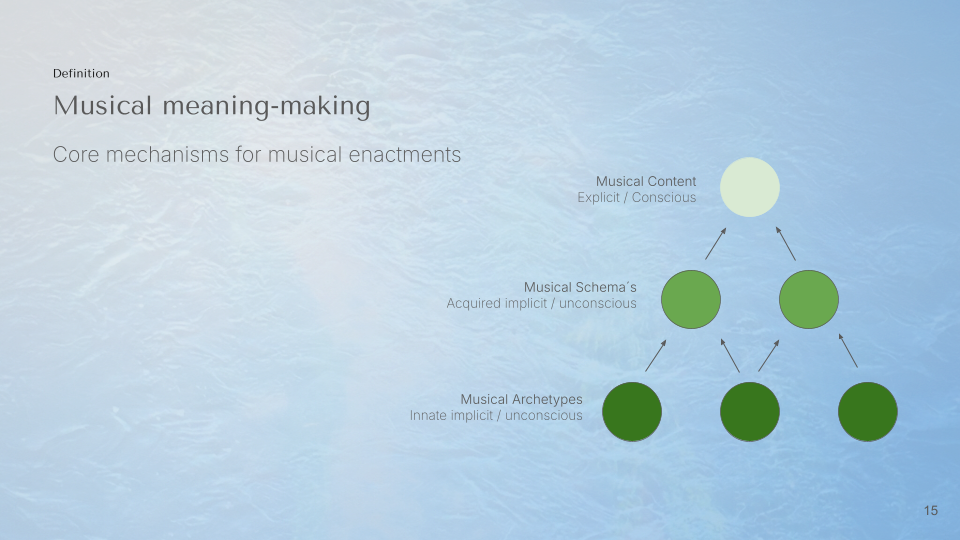
Theory lectures introduce existing and novel concepts gradually, from a foundational understanding of how music actually works, all the way to its therapeutic functions and how to apply them in practice.
.png)
.png)
.png)
.png)
.png)
.png)

.png)
.png)
.png)
.png)
.png)
Nine months
What we'll cover month by month
Each month builds on the last, moving from theory, all the way through to the practice of creating.
01 Origins of Music Month 1 +
An exploration of where music comes from and why music exists. We start our journey with a remembrance of the ancient and universal roots of music, and of what makes music so significant to us.
- Music as a foundational aspect of human consciousness — a non-verbal language and core mediator of intersubjective experience.
- Have we lost our musical nature, and what would it mean to remember it?
- Why does music exist at all?
- What is music, beyond entertainment?
- A new frame for music as human inheritance and social technology
- A clearer sense of how your relationship with music has evolved over time
Guided listening, reflective exercises, and practices exploring tension, peace, and the musicality of being human.
02 The Musical Self Month 2 +
Here we begin our inquiry into the relationship between music, selfhood, attachment, memory, and emotional life. This month explores how listening is shaped by who we are, how we developed, and what we bring into the musical field.
- What is the musical self?
- How does it develop across a lifetime?
- What has shaped my musical preferences and patterns?
- A clearer picture of your own musical personality and an understanding of how to recognise this in others
- A richer vocabulary for describing your relationship to music
Guided listening, personal inquiry, and reflective exercises exploring family, love, motivation, and the mapping of the musical self.
03 How Does Music Work? Month 3 +
Music and brains are both characterised by oscillations, by frequencies. In this module we trace the pathways of how sound becomes music, how music becomes meaningful, and how musical structure, perception, and context shape our experience and transform the self.
- How does sound become music?
- How does music become experience?
- What makes an experience supportive, healing, or disruptive?
- What shapes our likes, dislikes, and responses to music?
- A practical model of how musical meaning is constructed
- A deeper sensitivity to the mechanics of musical impact
Guided listening, musical analysis, and practices exploring silence, motion, meaning, confrontation, and the relationship between sound and experience.
04 Ways of Listening Month 4 +
There are many ways of relating to music. Here we define and experiment with different modes of listening, each highlighting a distinct dimension of music's value to the flourishing of the individual, to the human community and to therapeutic processes.
- In what ways can we listen?
- How do listening styles shape perception, emotion, and meaning?
- What changes when we listen for nuance and detail?
- More range and choice in how you listen
- A clearer sense of what listening mode supports which intention
Listening practices, self-observation, shared reflection, and exercises that deepen awareness of thresholds, space, field, and different listening orientations.
05 Dimensions of Music Month 5 +
This month we investigate what variables of music give it its unique psychological and experiential character. We recognise how combinations of various musical ingredients give rise to the unique, emergent experiences that make music so special. You'll significantly deepen your musical perception and interpretive sensitivity.
- What gives a piece of music its character, beyond genre and personal preference?
- How do progression types shape what unfolds over time?
- How does music evoke worlds, meanings, and trajectories?
- How do style, form, character, and layers shape experience?
- A clear way to hear and describe key musical dimensions
- A stronger feel for how anchoring, complexity, and progression shape safety, depth, and intensity
- Greater discernment when intentionally choosing music for particular contexts
Layered listening, body-based listening, examples of musical style and form, and practices exploring character, identity, musical meaning, and emotional worlds.
06 Therapeutic Music Month 6 +
Explore music as an active therapeutic agent within therapeutic processes. By expanding your own musical perceptions, we map out different functions music can serve and learn how they can support the balancing, restoring and growing of the self in unique ways.
- What are music's therapeutic functions?
- When does music help, and when does it get in the way?
- How do we choose music based on purpose, not preference alone?
- A functional map of what music can do in different contexts
- A clearer understanding of subjective response
- More discernment around matching music to intention
- Stronger timing and sensitivity when selecting and shaping music
Frameworks for therapeutic functions, receptive listening practices, case-oriented inquiry, and exploration of healing, familiarity, novelty, and therapeutic fit.
07 Creating Climates Month 7 +
We explore how musical experiences can be shaped significantly by everything other than the music itself. We examine the wider container, and learn how context, language, room and social variables all interact to impact the subjective atmosphere, and the depth listeners can reach within the music, and within themselves.
- How do we create therapeutic climates?
- What is musical language, and how does it shape experience?
- How do setting, context, and relational tone change how music lands?
- A more complete sense of music as environment, not just content
- Tools for shaping atmosphere with intention and care
Listening practices exploring music as environment, reflective exercises on context and relational tone, and shared inquiry into what shapes the conditions for deep listening.
08 Creating Playlists Month 8 +
Here you bring the previous months' learnings together and apply them in practice through weekly playlist design workshops. You'll learn new hands-on approaches to the design of musical experiences, ranging from curating, organisation, arcs, pacing, sequencing, themes, attunement, personalisation, and more.
- What does personalisation mean in practice?
- Why does one piece land as soothing for one person and unsettling for another?
- How do we sense what is needed and adapt accordingly?
- How do we create therapeutic playlists?
- How do we build musical arcs over time?
- A clearer understanding of subjective response
- A repeatable process for building playlists with integrity
- Stronger confidence in pacing, flow, and sequencing
- Stronger timing and sensitivity when selecting and shaping music
Playlist design workshop, music library curation tools, attunement practices, musical inquiry, and applied exercises around philosophy, metaphor, musical language, resonance, flow, and therapeutic context.
09 Course Synthesis Month 9 +
This final month focuses on consolidation, integration, and next steps. You'll gather together all the threads of the course, reflect on what has changed, and how you can continue to apply learnings to your own practice and ongoing development.
Teaching summaries, integrative listening, reflective practices, tools and resources, course synthesis, and closure.
Live cohort, September 2026
Join the September cohort
One group, meeting every fortnight on Thursday evenings for nine months. Places are limited to 20 participants.
Payment plans available
Live workshops with Mendel
Hours of live and recorded content
Learning modules
Course format
Multimodal and experiential learning
A structured container designed to support learning from theoretical understanding, all the way to practical application.
01
Live and interactive workshops
Fortnightly · 160 minutes
Live only
+
A steady rhythm of live teaching, guided listening, shared inquiry, and practical exploration. These sessions are where the course becomes dialogical, experiential, and applied. Concepts are brought to life through direct engagement, discussion, and musical practice.
02
Curated working groups
Maximum 20 per group
Live only
+
Working groups are intentionally kept small and carefully curated to create a rich mix of professional backgrounds and lived experience. This allows you to deepen your learning not only through the course material, but through the perspectives, musical worlds, and insights of others. At times, you'll also work in triads to create and reflect on musical experiences together.
03
Playlist design workshop
4 weeks · Month 8
Live only
+
In Month 8, the live session cadence increases for a dedicated playlist design workshop, where participants bring the course more explicitly into practice. This is where the learning becomes especially tangible, as you begin shaping musical journeys with greater intention, attunement, and responsiveness.
04
Video lectures
60–120 minutes per module
+
Engaging pre-recorded lectures of 10–20 minutes that bring complex ideas into a clear and compelling form. Across neuroscience, psychology, culture, therapy, and lived experience, Mendel guides participants through the conceptual foundations of the course in a way that is both rigorous and manageable alongside busy schedules.
05
Practical exercises
30–90 minutes per module
+
Each module includes guided listening practices, reflective prompts, and applied exercises that help the material move from understanding into experience. These are designed to train perception, sharpen discernment, and support the gradual embodiment of what you are learning over time.
06
Online portal and mobile app
Hosted by Kajabi
+
All course materials live inside a private learning portal designed for flexible, spacious engagement. You'll find videos, readings, exercises, prompts, and resources organised in a clear modular structure, with the option to revisit earlier lessons, track your progress, and engage on the go through the mobile app.
07
Learning modules
9 unique modules
+
Nine sequenced modules explore key dimensions of music and listening, forming a coherent framework for how music shapes perception, experience, and relationship. Each module integrates theory, guided listening, reflection, and practical application, supporting a gradual deepening of musical discernment over time.
08
Private community space
Shared reflection throughout
+
Alongside the formal teaching, participants can share reflections, respond to practices, and learn from one another inside the course platform. Each working group also has its own dedicated private space, creating continuity between live sessions and supporting a more relational, ongoing learning experience.
09
Bibliography and glossary
Context to deepen your understanding
+
Each module includes carefully chosen references and concise definitions of key terms, offering extra depth without overwhelming the learning process. These materials are there to support integration, clarify language, and give participants a richer framework for continued exploration.
10
Downloadable resources
Tools you can return to
+
Practical templates, worksheets, checklists, and support materials designed to help you bring the course into real-world practice. These resources are intended to make musical selection, storage, sequencing, reflection, and application more grounded, usable, and repeatable over time.
11
Music recommendations
Expand your library
+
Throughout the course, Mendel shares from his own extensive music library, offering carefully chosen recommendations that bring the teaching to life and expand your musical references. This shared library continues to grow through contributions from fellow students, creating a rich and evolving pool of music, perspectives, and listening pathways.
Frequently asked questions
Everything you need to know
01How is the course delivered?+
All recorded lectures, written materials, practice guidance, and community spaces are hosted via a private online learning portal.
02What is the time commitment?+
We recommend dedicating a minimum of 1–1.5 hours per week, and an ideal of 2–4 hours per week, combining theoretical exploration, experiential listening, and reflective practice. The pace is designed to integrate well alongside professional and personal commitments.
03What software or equipment do I need?+
You need a device to access the content and a pair of high fidelity headphones or speakers. We also recommend an eye mask to support fully immersive listening. Any additional tools and recommendations will be introduced during the course, with guidance on how to use them most effectively.
04How long can I access the course content?+
You will retain access to all recorded content and resources for at least 12 months online, allowing you to revisit and deepen your learning over time.
05What language is the course taught in?+
All sessions and materials are in English.
06Will I receive a certificate or CE credits?+
You will receive a Certificate of Completion. CE accreditation is currently in progress, and participants will be notified as soon as it becomes available.
07Is this course relevant to my training and background?+
The course is suitable for anyone in a profession that offers care or a therapeutic service, and is interested in introducing or deepening the use of music in their practice. Psychotherapists, psychedelic therapists, hospice care workers, body-mind practitioners such as breathworkers, teachers, coaches and guides are all welcome to join and form a collaborative, diverse learning collective.
08Do I need formal training in music or therapy?+
No. This course is open to curious listeners with no formal background in music or therapeutic training. You do not need to read music, play an instrument, or work clinically to benefit.
09Can I work with my own music selections?+
Absolutely. This course encourages you to bring your own musical landscape into the learning process. You'll be guided to explore, expand and work with music that resonates with your own musical personality.
10Is this course suitable for people working with plant medicine?+
Yes. This course is highly relevant for those engaging with plant medicines, whether in a professional, facilitative, or personal context. Music often plays a powerful role in non-ordinary states of consciousness, shaping emotional tone, attention, memory, and meaning-making. This course offers a grounded framework for understanding how and why music has these effects, and how to work with it more intentionally and responsibly.
Rather than offering protocols or playlists for specific medicines, the course focuses on developing listening sensitivity, musical discernment, and situational awareness. It does not require prior experience with plant medicines, nor does it promote their use.
11Will the course include listening to specific pieces of music?+
Yes, plenty. You'll experience a wide variety of musical examples across genres, styles and cultures, while simultaneously acquiring new modes of listening.
12Does the course address ethical or safety considerations?+
Very much so. Ethical integrity, safety, and cultural sensitivity are woven throughout the course. You'll learn how to work with music responsibly, especially within the context of vulnerable or expanded states of consciousness.
13How is this different from other music or sound healing training?+
This training uniquely bridges scientific research, psychotherapy theory, and experiential music practices. It integrates a number of disciplines into a coherent framework for the therapeutic application of music. The majority of these innovative approaches are introduced for the first time publicly within this course.
14I already work with music confidently. Will this still benefit me?+
Absolutely. Many enter this course with a pre-established musicality, a set of intuitive skills, or credentials in music therapy. What they will gain are new ways of understanding, enriching and using these in practice.
15What will this course give me?+
This course offers a starting point and catalyst for a renewed relationship with music and listening. Whether in therapy, creative work, or everyday life, you are likely to become more attuned, more intentional, and more aware of how sound and music shape experience, meaning, and connection.
16Why should I take this course now?+
This course is well suited to those who sense that music plays an important role in their work or life, but want clearer understanding and guidance. It supports a shift from uncertainty to confidence, helping you relate to music with greater intention, sensitivity, and care.
Begin your journey
Ready to deepen how you relate to and work with music?
Join a global community of practitioners, facilitators and musicians.
Payment plans available · Limited to 20 participants per cohort
Stay connected
Subscribe to the newsletter
News of new work, resources and live events, with the occasional reflection on music, consciousness and therapy.